Blankets & Sheets
Turnout blankets, stable blankets and uninsulated sheets. Choose outdoor protection and fill separately.
Shop Blankets & Sheets
Find horse blankets and sheets for changing weather, plus fly sheets, coolers, hoods, protective boots and grazing muzzles. Start with your horse’s coat, body condition, turnout routine and the product’s intended use. Compare the categories below, then use our buying notes to choose the right type and check the fit before use.
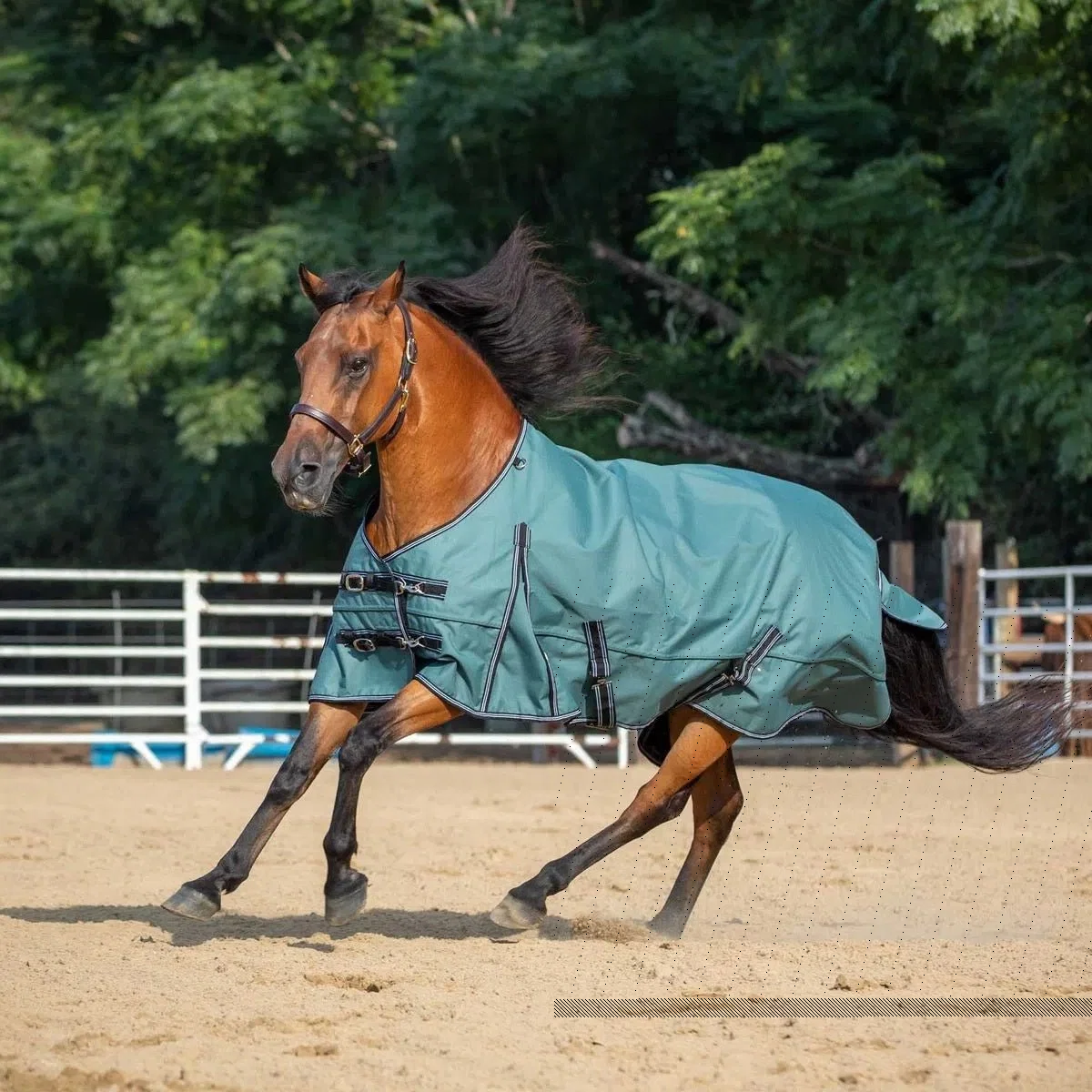
Choose by purpose: weather protection, drying, insect coverage or turnout management.
Turnout blankets, stable blankets and uninsulated sheets. Choose outdoor protection and fill separately.
Shop Blankets & SheetsMesh body coverage for insect season. Check fit, ventilation and any stated UV rating.
Shop Fly SheetsMoisture-wicking layers for supervised drying in suitable weather—not a substitute for cooling an overheated horse.
Shop CoolersCompatible neck covers and coat-protection hoods. Check clearance, movement and intended use.
Shop HoodsBell boots, tendon boots and wraps selected for the activity, with careful fitting and frequent checks.
Shop Boots & Leg WrapsEar coverage for riding. Noise reduction is a product-specific feature, not a property of every bonnet.
Shop Ear BonnetsPasture-intake management equipment to use within an individual feeding and turnout plan.
Shop Grazing MuzzlesA horse turnout blanket is designed for outdoor use; check the product’s waterproofing, breathability, closures and coverage. A stable blanket is intended for sheltered indoor use and should not be assumed waterproof. A turnout sheet generally has no insulating fill, while a stable sheet may be designed only to keep the coat clean.
A 0 g sheet can provide a weather barrier but is not equivalent to an insulated blanket. Rain, wind, shelter and whether the horse is clipped all affect the decision. Not every horse needs a blanket: many healthy, acclimatized, unclipped horses maintain comfort with appropriate shelter and forage.
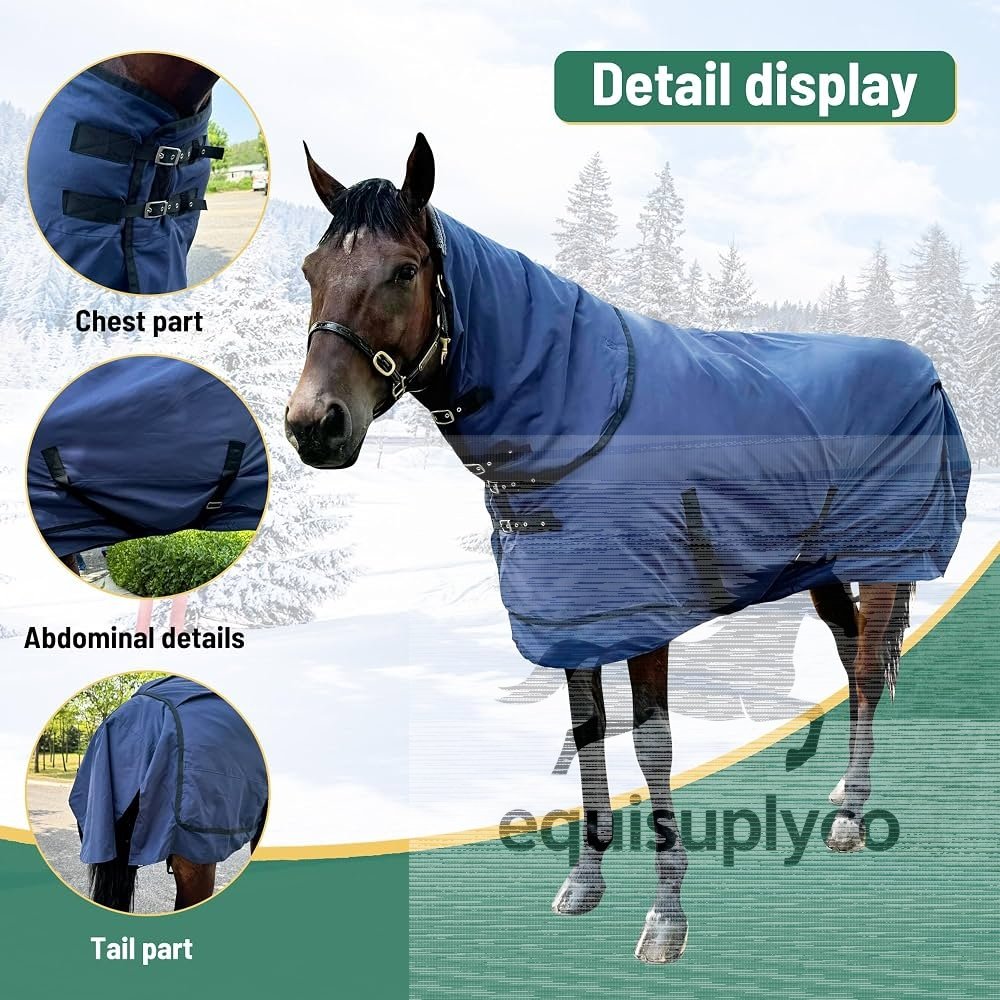
Denier describes the linear density of the yarn, not a direct strength rating. Higher denier can indicate a more substantial shell when comparing similar materials and construction, but fiber type, weave, seams and workmanship also affect durability. A 1200D label alone does not guarantee that a blanket will outlast a 600D model.
Fill weight is the amount of insulating fill, usually stated in grams. More fill generally adds insulation within a comparable product range, but labels such as lightweight and heavyweight vary by manufacturer. Neither denier nor fill weight tells you whether a blanket fits.
| Feature | What it tells you | What to check |
|---|---|---|
| 0 g / no fill | No added insulating fill | Outdoor waterproofing if used in rain |
| Insulated fill | Added thermal insulation | Individual need; avoid unnecessary warmth |
| 600D / 1200D / 1680D | Yarn linear density | Shell material, construction and warranty terms |
| Waterproof / breathable | Weather-management claims | Manufacturer specifications and care instructions |
Stand your horse square and use a soft measuring tape with a helper if needed. Many US brands measure from the center of the chest, around the shoulder and side, to a specified point near the tail. Follow the exact endpoints and sizing chart for the brand: cuts and measurement methods differ.
When between sizes, use the brand’s guidance rather than automatically sizing up. Check the return conditions before trying on a new blanket and keep it clean during a fitting.
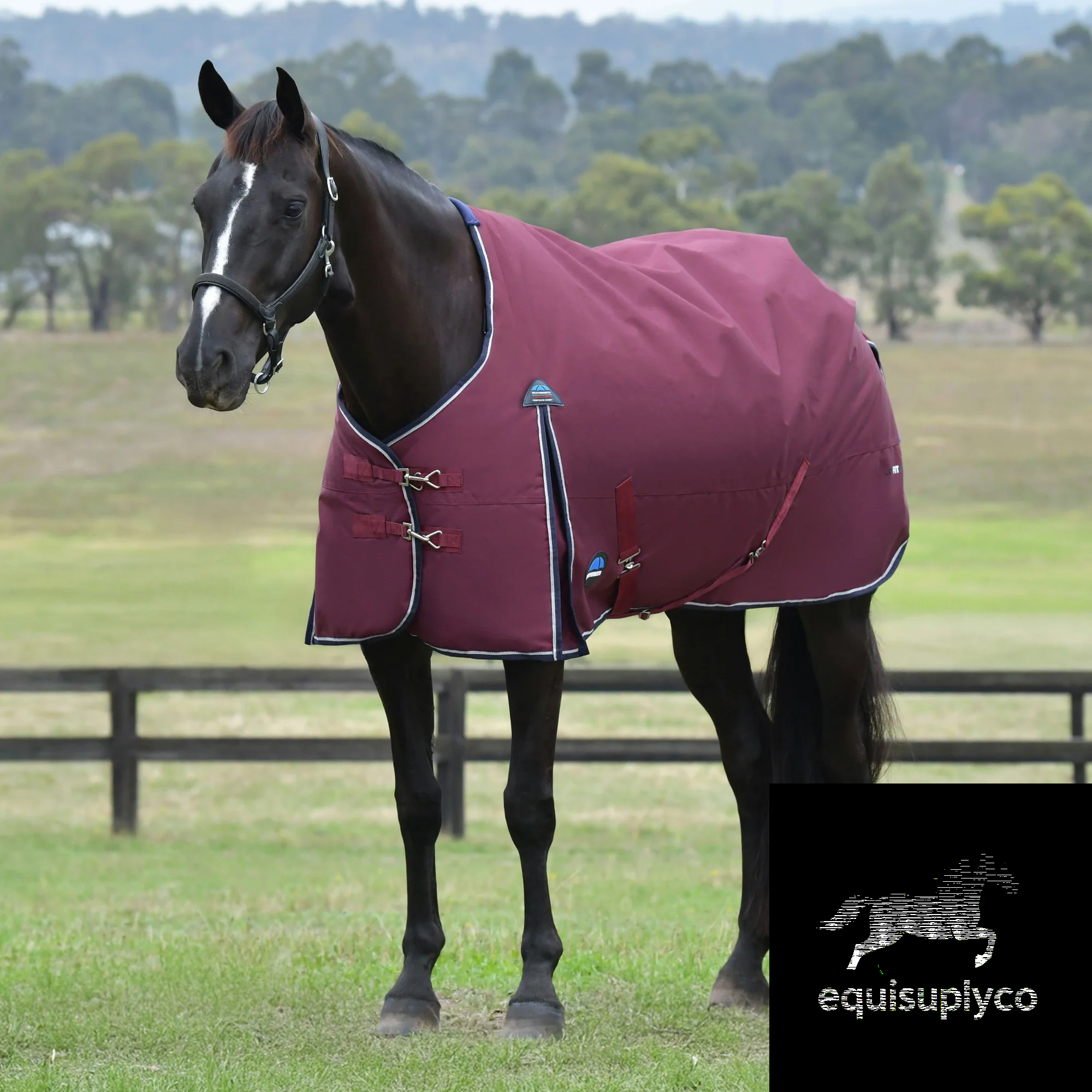
A horse fly sheet provides a physical barrier over covered areas, but it does not stop every insect or eliminate the need for other management. Compare mesh ventilation, belly coverage, neck options and rubbing points. UV protection varies by fabric and product; use the stated rating rather than assuming every mesh sheet blocks UV.
A correctly fitted fly mask is intended for face and eye coverage; an ear bonnet is not a substitute. Combine suitable coverage with manure management and horse-labeled repellents used according to directions. Monitor comfort in hot or humid weather and remove or change equipment if the horse overheats or develops irritation.
A horse cooler can help wick moisture while a horse dries in cool conditions. Choose fleece, wool or another suitable material based on the product’s design, fit and care requirements. Monitor the horse, replace a saturated cooler if needed and remove it once dry. A cooler is not a treatment for heat stress: an overheated horse needs active cooling, not another insulating layer.
Match horse hoods and neck covers to the blanket system. Stretch hoods and turnout neck covers have different purposes; check that the product is suitable for unattended turnout. Ensure nothing can shift over the eyes or restrict breathing or head movement.
Ear bonnets provide ear coverage during riding. Choose compatible sizing with your bridle, and check competition rules if applicable. Keep tail bags correctly secured to the hair, never tightly around the tailbone, and inspect them regularly.
Match leg protection to its purpose. Brushing boots cover areas exposed to brushing impacts; tendon boots protect parts of the lower leg from strikes; bell boots, also called overreach boots, help shield the heel area. None guarantees injury prevention, and an unsuitable boot can trap heat, rub or interfere with movement.
Follow the brand’s measurement chart, keep boots clean and check for trapped grit. Remove them after use and inspect the legs for heat, swelling or skin irritation. Stable, exercise and travel wraps are not interchangeable. Incorrect bandaging can injure a horse: ask a qualified professional to demonstrate the appropriate technique rather than improvising or substituting unrelated boots.
A grazing muzzle can reduce pasture intake, but the effect varies between horses and designs. It should be part of an individual weight-management and turnout plan, not a guarantee against laminitis. Consult your veterinarian or equine nutritionist about pasture access, forage needs and suitable wear periods, especially for horses with metabolic disease or a history of laminitis.
Use the manufacturer’s fit and clearance guidance, appropriate breakaway components and a gradual introduction. Confirm that the horse can drink from its actual water source, breathe freely and graze as intended. Check frequently for rubbing, wear, entanglement risks and frustration. A padded headpiece alone is not a breakaway safety feature.
Brush away loose hair and dried dirt, then follow the care label for washing temperature, cleaning product, machine capacity and drying. Some blankets are machine washable; others need specialist cleaning. Use a cleaner approved for that fabric and waterproof finish, and avoid fabric softener unless explicitly permitted.
Reproof only as directed by the manufacturer; reduced water beading can signal a finish issue but does not by itself establish that the waterproof membrane has failed. Check seams, tears and closures as well. Dry blankets completely before storing them in a clean, dry place away from rodents. Label size and fill weight, and arrange repairs before the next season.
A turnout blanket is designed for outdoor conditions; check its waterproof and breathable specifications. A stable blanket is designed for indoor or sheltered use and should not be assumed waterproof. Use each product only as intended.
No. Denier describes yarn linear density, not warmth or a guaranteed tear-strength rating. Insulating fill, construction and conditions affect warmth. Compare shell materials and construction as well as denier.
There is no universal temperature chart that suits every horse. Consider coat, clipping, body condition, health, shelter, wind and rain. Check for sweating, dampness and discomfort, and adjust as conditions change. Some horses do not need a blanket.
Use the manufacturer’s measuring method and sizing chart. Check chest and shoulder fit, wither clearance and freedom of movement, then adjust the straps as directed. Remove the blanket daily to inspect for rubbing.
Some can, if the care label permits it and the machine has sufficient capacity. Follow the specified cleaning product, temperature and drying method. Use specialist cleaning when recommended and reproof only according to the manufacturer’s guidance.